Hello Stranger
Getting to Know the People You Don't Know

My college roommate thought it very amusing that I talk to people I don’t know. She said she only had to look out of the window after I left for class to see me chatting with someone at the bus stop. But the thing is, I talk to everyone. I’ve talked to people on trains and planes and in nail salons, doctors’ waiting rooms and restaurants, in the line at Starbucks and the bank, and in the very long (and very slow) line at the post office where you could write a PhD dissertation waiting for your number to come up.
But who knew making these brief connections was actually good for you?
Those who are living alone and don’t intersect with other people too much may find this practice particularly satisfying. Each interaction, with a barista, bank teller, security guard, salesperson, the guy at the deli who makes your sandwiches, or the person sitting next to you, usually doesn’t require more than a few minutes of chit-chat. Yet it can have a positive impact on both people.
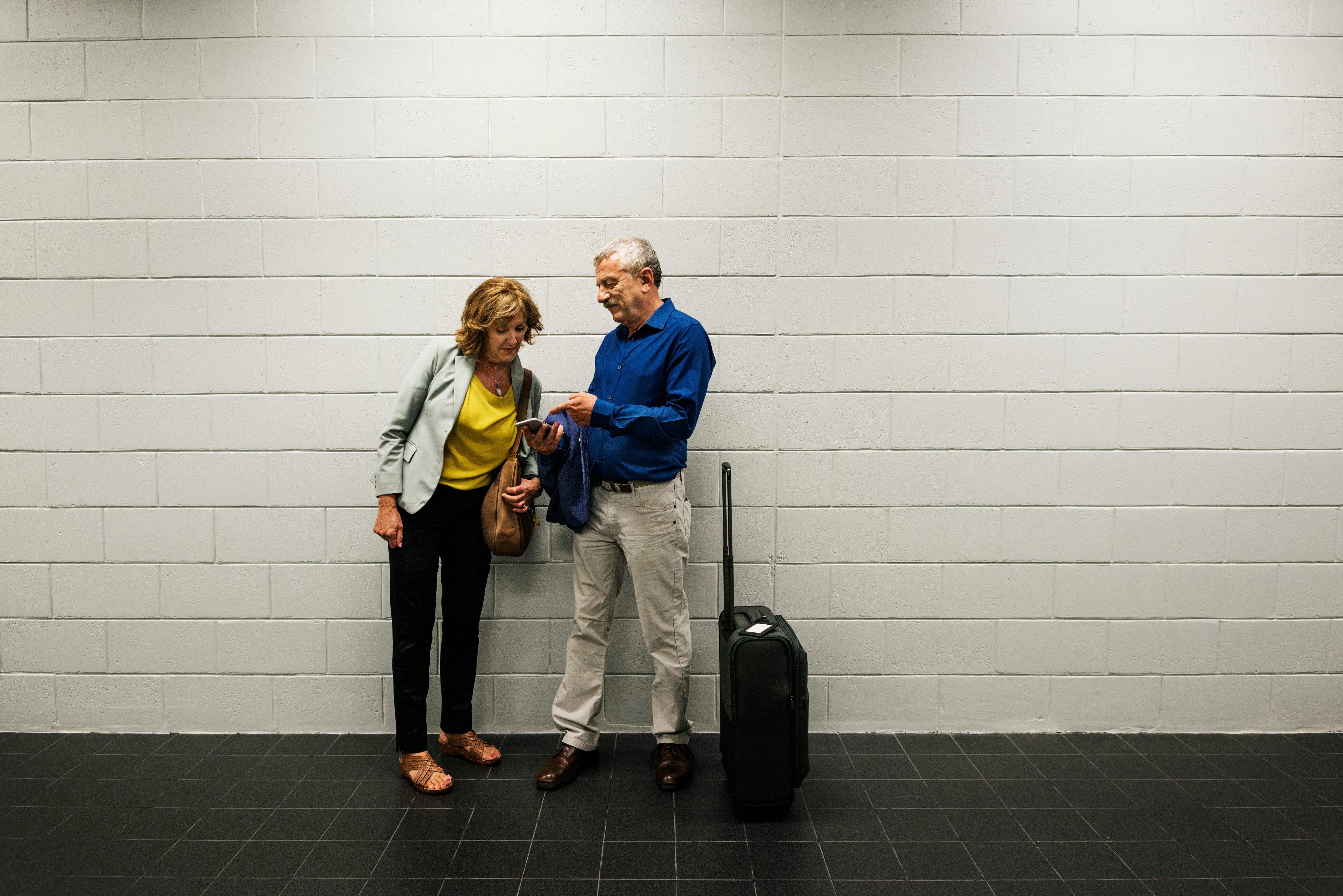
A study from 2022, led by Hanne Collins when she was a Harvard doctoral student, concluded that chatting and interacting with a wider variety of people in your life, people outside of your regular social circle, can have enormous benefits.
Collins, now an assistant professor at the University of California, Los Angeles’ Anderson School of Management, calls it “relational diversity,” meaning a mix of different relationship partners, both strong ties (family, friends, spouse) and weak ties (your postman, hair stylist, and the UPS delivery person).
“Over and above people's total amount of social interaction and the diversity of activities they engage in, the relational diversity of their social portfolio is a unique predictor of well-being,” she concluded in her study.

“This project came from a place where we know that human beings are a social species, and there’s research showing that social people are happier and people are happier when they’re socializing overall,” Collins says. “So that social connection is a key factor in our health and well-being. The question then becomes: who are we interacting with? Research tells us that strong ties are important sources of intimacy, validation, and social support. Further, other work in sociology speaks to the benefits of weak ties, and even shows that people confide more in weak ties than we expect, and they enjoy conversations with strangers more than they thought they would. We wanted to study the broad portfolio of people’s interactions—how many they have with different relationship partners, and how that relates to their happiness.”
Collins adds that the study did not provide an explanation as to why people who connect with a wide range of other folks are happier and that she hopes to do more research on the topic. But she adds, she is an introvert and after finishing her study, she expanded her social circle by taking an adult guitar class.
“I got a lot out of the class,” she says, “though not necessarily guitar skills. But the people were great.”
With nearly 30% of Americans living alone today, opening up avenues for connection is more necessary than ever. But the fact is that some people don’t want to engage or are uncomfortable starting up a conversation with a stranger, even though they may be short-changing themselves in the process.
Nick Epley, a professor of behavioral science at the University of Chicago Booth School of Business, specializes in social cognition — how people make inferences about other people's capabilities, intentions, and thoughts. He says social anxiety is part of the reason why people tend not to talk or interact with people they don’t know.
“Our data suggest that people often want to engage and know that they would be happier talking to others, but they don’t because they think that person doesn’t want to talk, Epley says. “And that seems to be not true. We find people underestimate how much they would enjoy reaching out.”

Epley conducted a 2014 study of Chicago-area train and bus commuters and a 2022 study of London-area train commuters to see what would happen if some of his subjects established contact with a commuter they didn’t know. In each study, those assigned to talk to a stranger reported a more positive experience than they had accepted.
“In the London study, we didn’t have a single person who connected with a stranger who tried to talk to a stranger report back that the person they talked to didn’t talk back,” Epley says.
Epley says why people don’t want to engage is the wrong question.
“Many times, we choose not to,” he says. “Our data suggest that people often do want to engage and know that they would be happier talking to other people, but they don’t because they think that person doesn’t want to talk. And that belief often seems to be mistaken,” Epley says. “We find people underestimate how much they would enjoy reaching out and it happens because we lack information. In our experiments in Chicago and London, we didn’t have a single person who actually tried to talk with a stranger report back that they person they talked to didn’t talk back.
It’s easy to imagine that today’s lack of interaction between people is all caused by the myriad of other electronic devices that we seem consistently glued to.
“I think some of that may be an illusion,” says Epley. He points to an exercise by social psychologist Stanley Milgram.
“He went down to the subways of New York in the 1970s and observed two unwritten rules of the system,” Epley says. “One, seats were on a first-come, first-served basis, and two, no one talked to anyone. It’s easy to imagine that our avoidance of strangers is all caused by cell phones. But what cell phones do is satisfy an inclination we already have. We think other people aren’t interested in talking to us, or that it would be awkward, so in those days you carried a book and now you carry your cellphone. The phones may not change the dynamics as much as we imagine they do.”
Epley adds: “You can choose to talk to folks, and you find out if someone’s interesting, but if you choose not to, you don’t learn, and you’ll never find out how your pessimism was misplaced or all the great conversations you could have had.”
Your mother was a great role model. Any connection, however small, can delight and enrich.
I remember an old boyfriend asking, “Do you have to talk to everyone?” It came in handy during all of my years as a flight attendant